

Building 'buddies' for managers and demystifying AI for the rest of us with Elaine Ezekiel
By Ben Goldstein
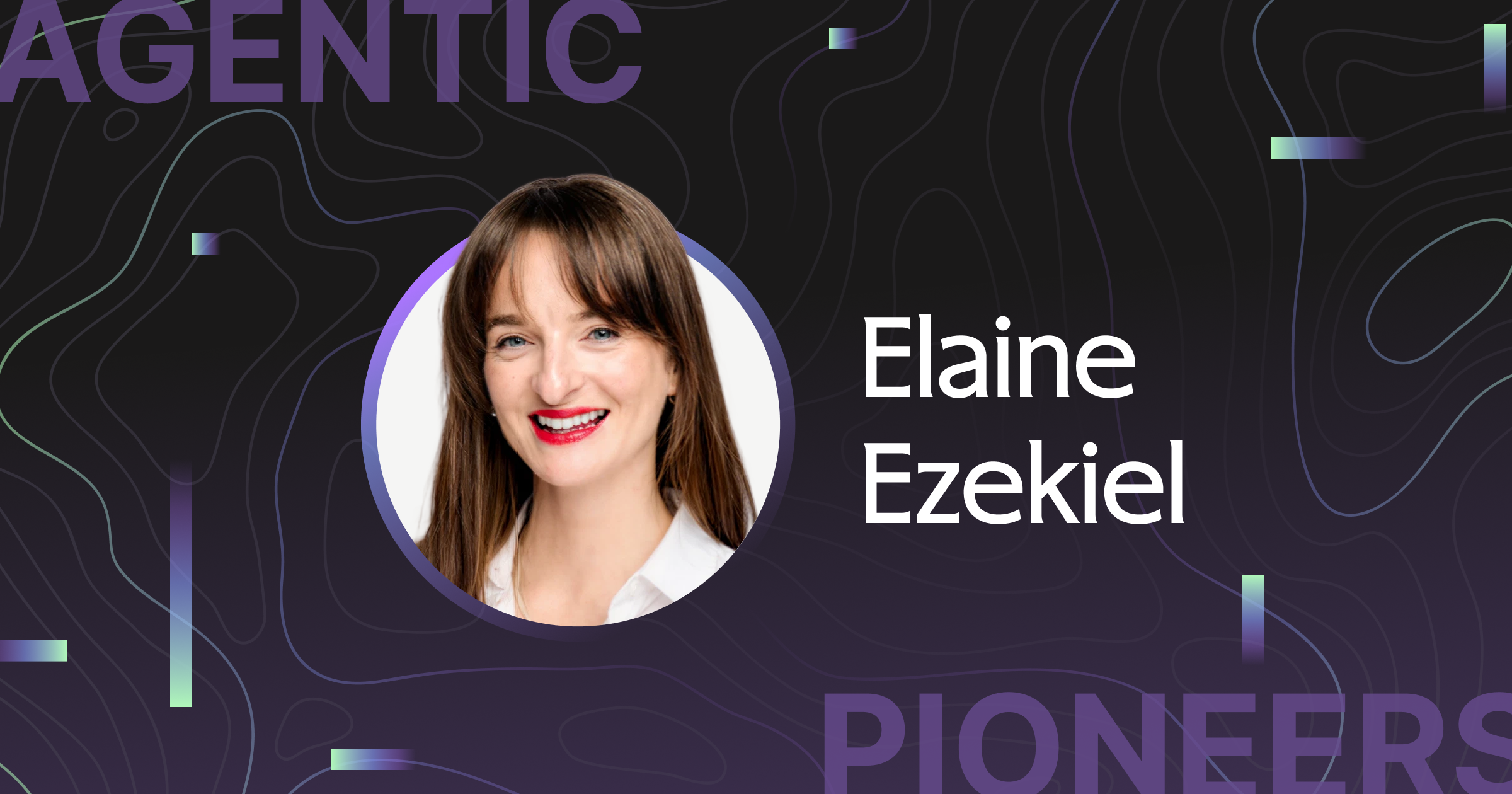
Since 2018, Elaine Ezekiel has served as the Director of Marketing at Atomic Object, a custom software development firm that has served clients including Domino’s, Ford and Johnson & Johnson.
“I'm surrounded by very smart, flexible people whose expertise is less in a specific industry vertical or language, and more about getting to the heart of solving problems with software,” Elaine tells Contentstack.
In addition to regularly sharing her AI and management insights on the Atomic Object blog, Elaine recently launched a free virtual workshop series called “Claude for Normies,” in service of her belief that AI education should be as accessible as possible, even for the skeptics.
“It’s fine if people are conscientiously or environmentally objecting to AI, especially marketers who might see it as a creative threat,” Elaine says. “You can choose to opt out of using these tools. But what I don’t think is acceptable is ignorance of them.”
1.Building “buddies” for her team
Elaine’s first lightbulb moment with AI came when her Atomic colleague Alecia Frederick built her a custom GPT that converted raw interview transcripts into the format Atomic uses for client case studies, collapsing four hours of careful hands-on editing into 30 minutes of review.
“I started getting curious about this idea of creating custom GPTs or skills that were intended for somebody else to use,” Elaine says. “When that mental model opened up for me, it was like, ‘Ooh, as a manager, I could create these mini applications in the form of AI agents for the people that work for me.’”
That shift — from building for herself to building for somebody else — sent Elaine on a journey of discovery. She readily admits she can be “particular about the ways that I want work done,” indexing closer to hands-on than hands-off. The challenge she wanted to solve was maintaining those standards without having to watch her direct reports like a hawk or slipping into after-the-fact frustration.
“A professional coach said something very helpful to me once,” Elaine recalls. “He said, ‘People don’t call it micromanagement when it’s done up front. They only call it micromanagement when it’s done after the fact.’
“And the reason is, after the fact is when people already have ego associated with their work output. Whereas if you're just framing up a task as a manager, it’s only seen as a useful kindness when you can provide a lot of clarity up front.”

That insight became the foundation for what Elaine calls “buddies” — Claude Skills that walk a member of her team through a defined deliverable by asking the right questions in the right order, built from the same hard-won standards she’d otherwise enforce in editing or rounds of feedback. (She calls them “buddies” rather than “documentation” on purpose; the language signals the kind of relationship she wants her team to have with them.)
Atomic Object’s press release buddy is the clearest example. As a former journalist, Elaine has strong opinions about what good looks like, and those opinions were exactly the kind of thing that could push her into the micromanagement trap. So she built a skill that handles the framing up front.
“I want the output to be a completed press release, in AP style, following the brand voice and positioning of Atomic Object,” Elaine says, describing her guidance during the buddy-creation process. “You need to solicit the who, what, when, where, why and how, as well as an emotionally compelling quote. You need to present it in the right format, double-check names and titles, the target audience. If there’s a money story to tell, you need to solicit actual dollar figures, because we all know that’s what makes journalists salivate.”
The pattern extends past press releases. Elaine has built similar buddies to help her team through blog post drafting and for event run-of-show planning, encoding “all of the things that we’ve seen go wrong” at Atomic events.
And the payoff goes beyond better output. “Hopefully it’s empowering to the people you hand it over to, that they can self-serve, come up with something good on their own and also learn a mental model of how to think about it to be successful,” Elaine says of the management value these skills provide. “You are not only improving the quality of the work, you are helping teach people how to think.”
2.Closing the adoption gap
The same impulse behind Elaine’s leadership work within the Atomic Object office drives the educational work she does outside of it. Spending so much time alongside Atomic’s curious developers and designers who were constantly stress-testing AI tools, she noticed an imbalance.
“The in-person office environment that I show up to every day has allowed me to learn more quickly than my peers who don't get to be in an office with software developers,” Elaine explains. “There’s a huge gap I’m seeing in the level of adoption and excitement. And I kept having conversations with smart people who didn’t have anyone to help them understand what these tools mean and what they're good for.”
So she started “Claude for Normies,” a free workshop series aimed at marketers and knowledge workers who are stuck on the surface level of AI exploration due to a lack of human guidance. In Elaine’s view, sharing her learnings in an empathetic way can help counterbalance some of the more anxiety-inducing and gender-exclusive elements of the public AI discourse.
“There are a lot of especially loud, somewhat manosphere-adjacent ways that learning AI gets socially coded,” Elaine says. “One bad cliché is people bragging about how many tokens they can burn in their work, which of course is totally unrelated from the value that they're creating.”
“So if there’s this persona of a woman who is smart and conscientious and has some reservations about using AI due to ethical concerns, that form of thought leadership is not going to appeal to them. It’s also meant to make people feel inadequate and unable, usually because there’s a profit motive behind the person talking about how good they are at AI so they can sell an ebook or course.”
Being intimidated or discouraged away from AI is a problem, Elaine believes, both because of how quickly your capabilities can compound with this technology, and because staying on the sidelines can allow less ethical voices to prevail.
“The people who are best at using AI tools are not smarter than the people who aren’t using these tools, it's just that they've spent more time tinkering with them,” Elaine says. “But because of the scale of change these tools are introducing, there's this logarithmic function of all the things that you're able to do once you get on a learning path.
“I want the people who use AI to also include people who have reservations about it, so that they can wield it with a little bit of nuance and consciousness. It would be pretty sad if the people who had spent the most time using AI tools were also the people that had the least scruples and ethical guidance in the way that they were doing their work.”
3.The work that gets pulled forward

When Elaine talks about measuring the ROI of her Claude buddies, she acknowledges the power of time saved; resource efficiency is what got her experimenting in the first place. But the metric she finds most interesting is something her colleague Sam Laidlaw shared with her.
“The most important way to measure ROI is the work that got pulled forward, that wouldn’t have happened otherwise, because you had space to think about and do it, because you weren’t stuck in the grunt work of it all,” Elaine says.
“Some of the people I talk to in my ‘Claude for Normies’ classes have said verbatim, ‘Great, I can get my job done in 60% of the time it took me to do it before, I’m gonna go take a nap.’ And I’m one of those sickos that’s like, ‘Or, we could go to that to-do list that never actually gets any attention, and pick up some of these interesting gambits that haven’t been tried before.’”
The other benefits she points to are more relational. The buddies, when they work well, replace late-stage editing with up-front clarity, making the manager/direct report dynamic more generative. There are also smaller, more personal returns she never expected.
“I was talking to my colleague Bryan Elkus, and we were trying to figure out the most useful internal skills we’ve developed,” Elaine says. “And he said, ‘Oh, for sure, the blog post skill.’ I had never heard him say that, but it made me so happy to know that I had made my colleague’s life a little bit better, which improved our working relationship in subtle ways.”
4.The road ahead
The challenge at the top of Elaine’s mind right now is one that’s currently haunting many organizations in AI’s experimentation era: company-wide adoption.
“The question I get when I share my content is, ‘We have all of these employees at my organization doing these interesting things, but they’re doing it in a silo,” Elaine says. “How on Earth are we going to be able to create knowledge bases or shared skills that are distributed among the team?’”
It’s a question that’s familiar to anyone whose company has been through the throw-it-at-the-wall phase of AI testing, where internal builds get a few admiring Slack reactions and then go unused. Elaine and some of her Atomic colleagues are now working on a more deliberate answer, building an “internal marketplace” where institutional knowledge can live as self-service skills rather than as documentation.
“I don't think anyone has landed on ‘the’ way to do this successfully, outside of paying Anthropic to manage it for you, but figuring out how to make sure these tools are as democratized as possible within an organization is an interesting challenge that I'm excited by,” Elaine says.
In the meantime, solving these challenges within her company — with care for what knowledge workers actually need and their often-ambiguous feelings about AI — is the kind of work that drives her.
“If I could snap my fingers, I would reverse the opening of Pandora’s box,” she says. “No one’s given me that option yet, so I’m trying to be a pragmatist and work within reality. I find these tools fascinating, but I’m not an AI cheerleader. I’m just someone who is trying to wrestle with this in a realistic and creative and pro-social way.”
5.Meet the pioneer
Elaine Ezekiel is the Director of Marketing at Atomic Object, a custom software consultancy with four regional markets across the U.S. Elaine is known for connecting disparate ideas, people and tools into approaches that didn’t exist before, then bringing the candor and momentum to actually execute them.
Beyond her marketing role, she co-founded Atomic’s Diversity Action Council and runs “Claude for Normies,” a free workshop series helping everyday professionals build real fluency with AI tools. Elaine is based in Ann Arbor, Michigan, where she’s a committed localist and a longtime trustee of the Ann Arbor Awesome Foundation.
To stay in the loop on upcoming “Claude for Normies” events, follow Elaine on LinkedIn.