

Drive success: Guide to demand generation best practices
Discover the power of demand generation best practices. From nurturing high-quality leads to repurposing content and advanced techniques like account-based marketing (ABM) and predictive analytics, use these to improve your marketing strategy. To understand how Contentstack can bring about change, request a free demo.
Highlights
You’ll learn about how to:
- Attracts customers without sounding too sales-oriented
- Creates interest and awareness in products/services
Demand generation strategies:
- Create content for various stages of the funnel
- Nurture high-quality leads
- Conduct competitor analysis
- Become an authority brand
- Invest in content marketing
- Partner on webinars
- Email marketing optimization
Transform your marketing efforts with these proven demand generation best practices. Brands using these demand gen strategies will likely see more impactful results.
Keep reading to learn more!
Ask 5 different B2B marketers about what demand generation is, and you’re less likely to receive the same answer. Why?
For some, demand generation is only about running ads on ungated content. For others, it’s more about sharing thought leadership articles, podcasting and weekly blogging. While these activities are a part of your demand generation mix, they are not the complete demand gen strategy.
A good demand generation strategy becomes a cornerstone of your business success as it helps you produce customer demands. Generating demand makes it easier to turn prospects into quality leads, eventually resulting in loyal and long-term customers.
But what is demand generation? Why should you care about it and what are the best practices for generating demand to transform your marketing and sales strategy?
What is demand generation?
Demand generation is how your products, services or business reaches your target audience and gets customers excited about your offerings without explicitly sounding too salesy. It’s about generating demand. Demand generation exists to attract customers and inspire them to purchase your products.
Let’s understand demand gen with an example:
Your business offers a headless content management system (CMS). If an executive of an e-commerce company goes to Google or any other search engine and searches for “Content management system,” your ads appear on the search engine, allowing the executive to fill out a contact form, visit your web page, request a free demo and ultimately become your customer. Here, you’re not generating demand; you’re capturing the interest of people already interested in brands like yours.
However, what if the e-commerce executive doesn't know whether a headless CMS exists? What if they’re frustrated by scalability issues, inconsistent workflows and other content-related issues? That’s where demand generation works to target customers unaware of your brand. Demand gen tries to educate your customers about the other available options.
To sum up: Demand generating is all about creating interest—generating demand—for your services and products among your target audience.
Demand generation vs lead generation
In the example above, when the executive sees your ads on search engines, it's because of the lead generation and the second instance where you educate customers about your product is the demand generation. Here are some more differences:
|
Criteria |
Demand generation |
Lead generation |
|
Definition |
Marketing strategy aimed at creating demand and awareness. |
Captures leads and converts interest. |
|
Scope |
Builds awareness, interest and engagement in every stage of the marketing funnel. |
Focuses on the middle and bottom of the funnel, targeting conversion. |
|
Goals |
Increase brand awareness, engage the target audience and turn leads to customers. |
Attracts high-quality leads and turns them into customers. |
|
Approach |
Uses content marketing, social media platforms, webinars and events. |
Focuses on forms, call-to-actions, landing pages and contact collection. |
|
Metrics |
Brand reach, engagement rates and overall awareness. |
Conversion rates, number of captured leads and lead quality. |
|
Techniques |
Account-based marketing (ABM), content marketing and market education. |
Lead scoring, email marketing and targeted campaigns. |
|
Audience |
Targets a broad audience to create interest and demand. |
Focuses on prospects who have shown interest and fit the ideal customer profile. |
|
Outlook |
A long-term strategy is aimed at creating a continuous pipeline of potential customers. |
Shorter-term strategy focused on immediate lead capture and potential sales opportunities. |
Demand generation generates a higher number of leads while generating the right and qualified leads. Higher-quality leads have a higher chance of becoming loyal customers.
9 Demand generation best practices
Here are nine different demand generation strategies to consider:
1. Create content for various stages of the funnel
The most important demand generation best practice is creating content and educating customers in each stage of your marketing funnel. To educate customers, you cannot focus on producing thought leadership blogs or product-led content. You need to diversify your focus and create numerous types of content.
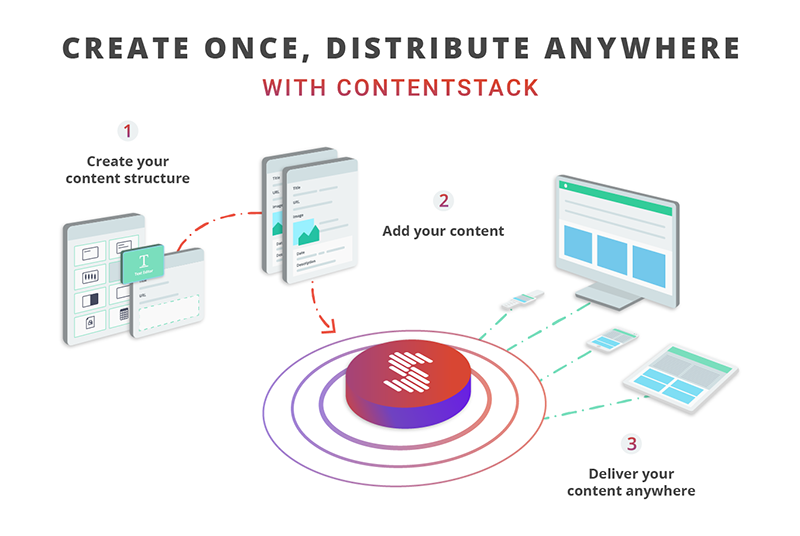
When you create the following content, you create demand and inspire people to look at your offerings:
- People know your product but are looking for helpful and free solutions.
- People are product aware; you only have to educate them about your product’s features.
- People are product-aware but require some convincing before they buy your product.
One-size-fits-all content will not convert these people into long-paying customers. You need different content for each, as they are in different stages of your marketing funnel.
- Educational content or blogs that answer all their questions and position you as an expert in your industry.
- Product-focused content that positions your product or service as the right option for your reader’s problem.
- Product comparison content to show why your product is better than your competitors.
This means for customers in the:
- Top of the funnel: Create awareness-focused material, such as social media updates, blog posts and introductory videos.
- Middle of the funnel: Share product-focused content, such as whitepapers, case studies, and product demos.
- Bottom of the funnel: Write decision-making guides, such as product comparisons and customer testimonials.
Ensuring relevance and engagement at each stage of your marketing funnels moves your potential customers through the sales funnel, resulting in higher conversion rates.
Case study: How did Mitsubishi Electric revamp its website to generate demand?
Mitsubishi Electric Europe B.V. redeveloped its Factory Automation EMEA website to generate demand by improving search capabilities, helping them create local content. They integrated the new system with SAP CRM and commerce platforms, allowing local marketing and sales teams to create market-resonant content. The updated site now supports 21 localized sites, allowing faster content publishing and improved lead generation.
Plans include further streamlining the publishing process and fully integrating Contentstack with SAP CRM, aiming for a unified digital presence and superior customer experience.
After using Contentstack, Andrea Intveen, Website Manager Factory Automation EMEA, said:
“Embracing headless CMS, especially the concept of providing centralized content for individual localization alongside all-local content, was a new way of doing things. We underwent a big learning curve. This was not only with the technology but also increasing our autonomy and no longer relying on our supplier. This has begun to pay dividends as we now see much more content from local teams that resonates with their markets.”
You can read the case study here.
Modernize your digital presence with Contentstack. Learn from the success stories of Icelandair and Pella. Improve your site performance, publishing efficiency, and speed, just as they did. Start your journey towards a modern digital experience. Start your free trial with Contentstack today and witness an ROI of up to 295%.
2. Nurture high-quality leads
So, what do you do when a lead interacts with you for the first time? Your marketing and sales team provides you with the leads. Everyone is happy because they think they successfully closed a lead. Wrong.
Demand generation campaigns go full circle and require a full lead nurturing strategy from when a customer makes their first contact through their decisions and purchases.
Work with your sales and marketing teams to build genuine relationships with leads who show a real interest in your product or service. Remaining in line with their questions, concerns, preferences and pain points helps you personalize your communications and offers. Personalized messages build long-term customer relationships and increase customer satisfaction.
Continuously gather feedback from these customers to tweak changes in your demand gen and marketing strategies. Let’s understand using an example:
For instance, if you offer project management tools, you may notice that a particular lead frequently visits your website's pricing page and reads your blog posts about team collaboration—showing that the customer intends to improve their team’s productivity.
Create emails that show prospects who are on the fence about why your product is the one they need. To further inspire them, offer them a free trial or a demo. Continuously engaging and working on the feedback received forms the backbone of a strong relationship.
3. Conduct competitor analysis
Figure out what others in your industry are doing to increase brand awareness, spread information about your brand and generate demand. When analyzing your competitors, take a look at:
- What content they’re sharing?
- What are they doing differently, and why they’re unique?
- What type of content are they sharing to engage their audience?
- Which marketing channels are they using to connect with their audience?
- How are they inspiring and attracting customers in every marketing funnel stage?
But why conduct a competitor's analysis?
- Identify their strengths and weaknesses
- Understand market shifts
- Tweak your marketing strategies
- Improve your products or services
- Provide better value to your customers
- Adapt to market trends
After analyzing your data, use opportunities to double down on and generate qualified leads for your business.
4. Become an authority brand
Share useful content regularly to build trust and authority for your brand. Post blogs, whitepapers and videos your audience cares about. Your customers like it when you respond to their comments and questions on social media platforms, host webinars and join industry events and discussions.
Showing your expertise with detailed case studies and happy client testimonials is another way to convince customers that your product is what they have been looking for all this time.
For instance, if you run a tech company, publish articles about the latest tech trends, host monthly webinars on software tips and share stories of successful projects. Doing so helps you earn more trust. You become a source of information because your customers see you as an authority in your niche—increasing loyalty and long-term success.
5. Invest in content marketing
How do you keep customers informed about your product’s latest features?
New and fresh content helps you attract new customers. Track your customers' behavioral patterns and how they engage with your brand to develop a content calendar and share it across various platforms.
The more details you provide, the higher the chances of reaching your top-notch leads and converting them into loyal customers. However, the question springs out: what is the importance of developing new and fresh content when you don’t market it?
With 88% of companies using content marketing to create brand awareness and build credibility, 80% to educate customers and 72% to generate demand and leads—content marketing is a solid investment strategy.
Blogging regularly ensures your target audience understands that you’re an expert in your industry. When your target audience believes you know what you are saying, you encourage them to trust your brand.
If you have already defined your targeted audience, identify the marketing channel for content marketing. For instance, you distribute your content on social media and through email newsletters. Ongoing and purposeful distribution guarantees that important information reaches the right target audience at the right time, increasing the brand’s visibility and customer loyalty.
6. Integrate CRM and marketing automation
A successful demand generation campaign involves a lot of action and strategy, making it challenging to manage things manually. That’s why relying on automation tools is a great way to get things running and doing more in less time.
When used together, your customer relationship management tool (CRM) organizes and stores your customer records. Whereas your marketing automation tool assists with tracking the records, personalizing your marketing campaigns and automating repetitive tasks.
For instance, automating the workflow makes it easier to create targeted email marketing based on customers’ behaviors, such as visiting a pricing page or downloading a whitepaper. This serves customers' needs and makes your sales funnel strategy effective and beneficial.
7. Repurpose content into different formats
Content repurposing refers to reusing your existing content and posting it fresh in different formats. For instance, you can take an old blog article and share it on Twitter in threads, on Instagram as a story or turn the article into a short clip. Content repurposing transforms a webinar or a podcast into a blog post or vice versa.
But how does that help in demand generation?
The more your brand gets seen, the higher the awareness and reach of your messages. For the audience, you become an authority in your niche. They will trust you more than brands not visible on different marketing channels. Because of this, you reach new audiences and form better relationships with your current customers.
Repurposing content means that your content can be used more than once and in different formats.
8. Partner with industry people on webinars
Webinars are another way to generate demand and obtain qualified leads. Partnering with industry people lets you showcase your expertise and products and build relationships with potential customers.
Educate your audience through webinars featuring guest speakers from various industries. Webinars offer interactive platforms for asking questions, getting immediate answers, and networking.
9. Optimize your email marketing strategies
Email marketing is not going away anytime soon, irrespective of how digital or search marketing explodes. Even today, the ROI of email marketing is $1 for every $45 you spend.
In fact, for many companies, email marketing offers a data source that optimizes their strategies. To achieve this, audit your email marketing’s performance to determine its open rates, unsubscribe rates, spam complaints, bounce rates and more. When you act upon the data obtained, you easily attract qualified leads.
If you want to increase your brand awareness using emails, send informative and visually appalling emails. If your emails are bland, your readers will take less than a second to hit the unsubscribe or delete button.
Advanced techniques in demand generation
Focus on account-based marketing (ABM)
Account-based marketing or ABM, is a strategic business approach to engaging with highly targeted prospects and customizing content for them. By using ABM, the client increases the business scale and revenue.
How?
This demand generation best practice generates demand by creating solutions to the prospect's pain points. A successful ABM campaign is highly personalized and customized to the account it focuses on. Using ABM, you increase your win percentage, improve customer lifetime value and develop strong account relationships. With a clear ABM strategy, you make the most of your budgets and limited resources and deliver personalized messages, providing more value to customers.
Use predictive analytics
Analyzing past customer interactions and behaviors helps you predict what your customers will do next. It helps you tailor your demand-generation campaigns. Think of it as getting a sneak peek into your customers' preferences and needs.
When you use data, creating customized experiences becomes a breeze. Predictive analytics makes your efforts more targeted and efficient. When you make data-based decisions, you’ll see an increase in your conversion rates and customer satisfaction.
Discover the future of content experience with Contentstack: Pioneering the integration of ChatGPT with Digital Assistant, Contentstack stands out in the Aragon Research Globe™ award. Our low-code approach and product innovations set us apart. Join our group demo to experience a future-leading content experience platform.
Implement cross-platform retargeting campaigns
Engage your prospects across different platforms for better conversion opportunities by using targeted ads that follow them around.
For instance, when customers browse your product on Facebook but do not buy it, they see a friendly reminder on Instagram or Google. This keeps your brand fresh in their minds. It encourages them to take action, whether purchasing, joining your newsletter, or learning more about your products.
Use data from various channels to create personalized and consistent ad experiences that truly serve your customers’ pain points. And don't forget—regularly analyze and tweak these campaigns based on user behavior and feedback to make them more effective.
Result?
You see a higher engagement and better conversion rate.
FAQs
What are demand generation strategies?
Demand generation strategies create awareness and interest in your products or services. It aims to build a sales pipeline full of qualified leads.
What are the three pillars of demand generation?
The three fundamental requirements of a successful demand generation strategy are creating brand visibility, building awareness, customer communication and converting customers into long-term paying ones.
What are the basics of demand generation?
Demand generation means understanding the customer, creating value from content that a potential customer needs and reaching the customer using the most appropriate channel.
How to enhance your demand gen efforts?
To enhance your demand generation efforts, ensure your marketing and sales efforts are in line with business objectives, use data to make informed decisions and test your strategies to improve performance.
What is B2B demand generation?
Using different strategies, B2B demand generation promotes a product or service in the business-to-business sphere.
Learn more
Remember, demand generation is only successful when you know your customers inside and out and provide them with exceptional values that no one else offers.
Only when you provide value, you drive brand awareness and generate demand for your products and services. If you want to know how demand generations elevates your marketing strategies, request a free demo.