

Scaling storytelling at speed: How leading retail & luxury brands keep their rhythm under pressure ('The Experience Factory' ep.2)

Share
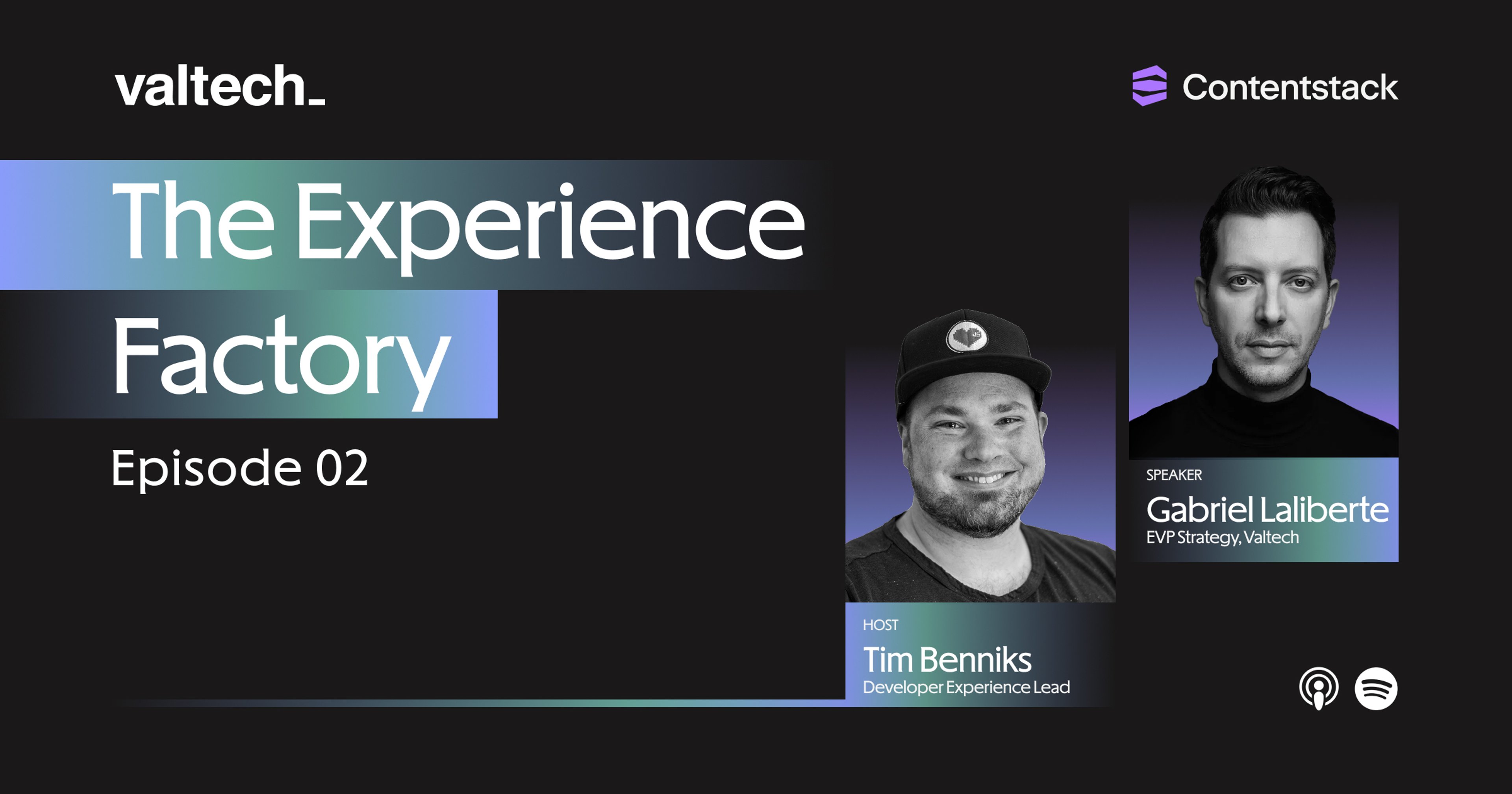
In episode 2 of 'The Experience Factory,' leaders from Valtech and Contentstack explore how top retail and luxury brands manage to scale storytelling without losing brand identity, even under peak-season pressure.
In the second installment of The Experience Factory, François Haguel (VP, Global Alliances Lead at Valtech), Tim Benniks (Developer Experience Lead at Contentstack) and Gabriel Laliberte (EVP of Strategy at Valtech) explore how top retail and luxury brands manage to scale storytelling without losing brand identity, even under peak-season pressure.
The hosts revisit the musical metaphor from episode one, drawing parallels between high-velocity marketing cycles and jazz improvisation: When teams stay in rhythm, they deliver consistent, elegant experiences at scale. Coordination, not creativity, is often the true bottleneck.
Here are six key takeaways from the episode, each one offering a practical strategy that brands can use to build a sustainable storytelling engine under pressure.
1. Coordination over creativity: Speed is nothing without structure
In high-pressure retail environments, the rush to produce content often triggers chaos when teams lack shared structure. Coordination and alignment are often more important than raw creative speed.
As Tim Benniks puts it: “Against the backdrop of peak-season demands, coordination — not creativity — is the true bottleneck.”
This insight reframes the mission: Before dreaming up the next campaign, brands need to invest in the foundations (workflows, governance, roles) that allow teams to move fast without breaking alignment. Without that, every creative sprint risks becoming a disconnected sprint. Brands that master structure first create space for creativity under pressure.
2. Treat storytelling as a repeatable rhythm, not one-off campaigns
What separates high-performing brands is their ability to think like a jazz band — where every “song” (campaign) follows a shared rhythm, allowing solo improvisation without losing harmony. Successful brands build a continuous cadence for content and experience delivery rather than episodic, ad-hoc efforts.
Gabriel Laliberte explains this shift as: “staying in rhythm, balancing speed with intention and structure with creative freedom.”
By embedding a rhythm — a repeatable process of planning, creating, activating, learning, iterating — brands ensure that even under pressure, their marketing, content, tech and commerce teams are marching together. The outcome: predictable delivery speed, consistent brand tone and scalable storytelling.
3. AI isn’t the soloist — it’s the rhythm section
AI shouldn’t be viewed as a replacement for creativity, but as the backbone that keeps the rhythm steady. When content models, data and brand language are structured, AI becomes a force multiplier rather than a risk.
As the hosts put it, AI acts like the bass and drums in a jazz band, keeping time so the soloists (creatives, merchandisers, strategists) can focus on expression. That synergy enables brands to deliver personalized, dynamic, yet consistent experiences at high velocity.
In practice, this means investing in composable content architecture, modular content design, and shared data model standards, so AI can support distribution, personalization and scalability without fragmenting brand integrity.
4. Peak-season success comes from predictable, repeatable workflows, not heroics
Holiday sales, new product drops, and seasonal campaigns demand speed — but heroics don’t scale. The episode argues that peak-season success is less about one-off bursts and more about predictable, repeatable workflows baked into the brand’s operational rhythm.
When workflows are repeatable, teams know what to expect. That clarity reduces friction, preserves quality and allows for last-minute changes without breakdowns. It turns the chaos of peak seasons into a well-rehearsed performance, giving marketers time back to focus on strategy rather than firefighting.
5. Structure enables flexibility: The paradox of fast and consistent storytelling
The episode reveals a core paradox: The only way to be fast and flexible is through structure. Just like jazz needs a sheet of music and steady tempo, storytelling at scale needs frameworks that guide without constraining.
This structure means modular content, shared templates, standard data schemas and governance guidelines — enablers of agility. When teams know the rules, they gain the freedom to improvise within them, enabling speed without sacrificing brand coherence.
6. Delivering consistent, elevated experiences builds brand trust at scale
Ultimately, when storytelling becomes a reliable rather than sporadic force, brands earn consistency across touchpoints: from ecommerce, to in-store, to personalized marketing. The episode makes clear that experience orchestration isn’t just operational efficiency, it’s a strategic differentiator that builds trust and loyalty.
In a world of ever-rising consumer expectations and shortened attention spans, consistent orchestration signals reliability. It ensures that each brand interaction — whether first click or return customer — reflects the same quality, style and promise. That predictability becomes part of the brand experience itself.
What This Means for Your Brand Strategy
- Build your rhythm before you build campaigns. Establish repeatable workflows, modular content and shared governance, so every campaign flows smoothly — even under pressure.
- Use AI as a backbone, not a shortcut. Combine structured content models with AI-driven activation to scale, while keeping brand personality human and consistent.
- Invest upfront in structure to unlock long-term flexibility. Modular content design and composable architectures might cost more initially, but they pay off when speed, scale and brand consistency matter.
- Plan for rhythm, not bursts. Think in cycles, not campaigns. Content should flow continuously — not spike sporadically — to maintain momentum and product cadence.
Deliver consistent experience, everywhere. When content, commerce, marketing and data operate in sync, customers receive a unified, elevated brand experience, building long-term trust and loyalty.